
Warehouse and distribution floors
Aisles, racking surrounds and open floor on a sweeping and scrubbing cycle matched to traffic. Equipment is chosen for the area covered, since a large floor cleaned by hand is neither consistent nor economic.
Serving Virginia Beach, Virginia & surrounding areas
Mon–Fri 8am–6pm Sat 9am–2pm
Facilities here range from large distribution space to small professional offices, often with a good distance between them. The plan accounts for that spread and for how much of the dirt in these buildings arrives from outside.

In buildings surrounded by yard, hardstanding or open ground, most of the soil on an internal floor came in on a boot or a tire. That changes where the effort belongs: entrances, dock aprons, the first stretch of internal floor and the transition between concrete and finished surfaces earn far more frequent attention than a figure based on total floor area would suggest. Matting and a defined walk-off zone do more for the look of a building than an extra pass further inside. Seasonality is part of this too. Wet months and harvest-related traffic both increase what arrives at the door, so the scope sets a higher frequency for entrance and dock areas during those periods rather than holding one interval across the year and quietly falling behind for part of it.
A distribution facility and a professional office need different programs, and plenty of sites here contain both. These areas are specified separately in the scope.
Aisles, racking surrounds and open floor on a sweeping and scrubbing cycle matched to traffic. Equipment is chosen for the area covered, since a large floor cleaned by hand is neither consistent nor economic.
The highest-frequency items in most scopes here, because this is where outdoor soil arrives. Matting, walk-off zones and the first internal stretch are handled as one unit.
Workstations, meeting rooms and reception inside or attached to an operational building, held to an office standard rather than the standard applied to the warehouse floor.
Break rooms, changing areas, restrooms and showers at a frequency set by headcount. On a site with outdoor work, these carry heavier soil than an office equivalent of the same size.
Standalone offices, consulting rooms and client areas on a set-day rota, with entrance and floor care scheduled around the weather rather than a fixed annual interval.
Scrubbing, sealing and refinishing on their own intervals, planned around operational downtime and listed separately so routine visits are not expected to absorb them.
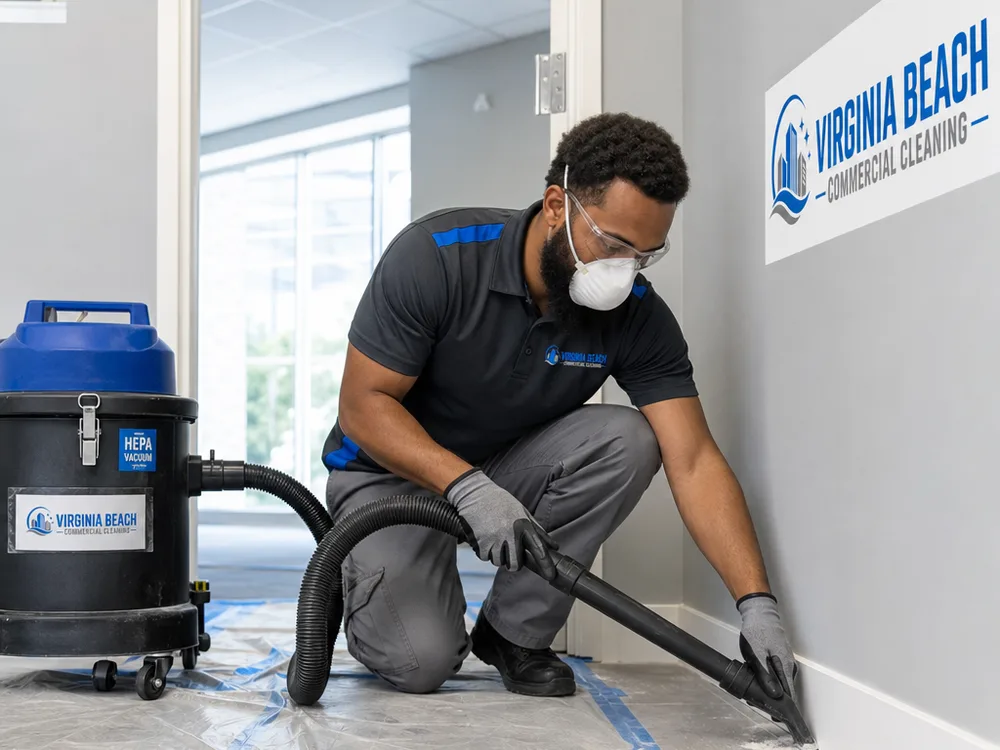
Where buildings sit well apart, the schedule has to be honest about travel or it will not hold. Each site is given a fixed slot and a realistic time allowance before recurring work begins, and the visit order stays stable so no building becomes the one that gets whatever remains at the end of a shift. Where a company has more than one facility here, we set out the options plainly: one crew working through them in sequence, or separate nights per site, with the cost and consistency difference stated rather than implied. Access detail carries extra weight on a spread-out route. Gate codes, yard access, where a van can park without blocking a dock, and who to call when something is locked all get recorded at setup, because a crew that cannot get in has lost the slot entirely rather than merely running late.
Setup focuses on the two things that decide whether a spread-out schedule survives: realistic time per site and access that is written down.
Tell us the facility types, how many locations are involved and which areas need regular attention. That shapes both the routing and the scope.
A walkthrough per site confirms floor types and area, headcount, dock and entrance arrangements, and anything needing special handling or equipment.
Gate codes, keys, alarm procedure, parking and the on-site contact are all documented before service starts, along with who authorises changes.
Each area gets its task list and frequency, including raised seasonal frequency for entrances and docks, and the visit order across sites is fixed.
We check which slots held and whether the seasonal frequencies were right, then revise. Time allowances that proved optimistic are corrected rather than absorbed by shortening the work.
The number follows the schedule, the area and the conditions at each site. As a general guide across our service area, commercial cleaning typically runs about $0.10 to $0.30 per square foot per visit, with many smaller offices landing around $250 to $900 per month depending on frequency. Large distribution space is usually quoted on the machine time and the cycle it needs rather than scaling an office rate upward, since the work is different in kind. Where several sites sit far apart, travel is part of the labor time and is quoted openly instead of being buried. Periodic floor programs are priced separately. Exact pricing follows a walkthrough and a written scope of work.
Most questions here concern large floor areas, outdoor soil and how a schedule holds together when sites are far apart.
On a sweeping and scrubbing cycle using machinery sized to the area. A floor that size cleaned by hand is neither consistent nor economic, so the equipment and the cycle are specified in the scope.
Yes, and it is where the effort belongs. Entrances, dock aprons, matting and the first stretch of internal floor get the highest frequency in the scope, which does more than extra passes deeper inside.
For entrances and docks, yes. Wet months bring more soil to the door, so those areas carry a raised frequency during those periods rather than one interval held across the whole year.
Not if the plan is honest about travel. Each site gets a fixed slot and a realistic time allowance before service starts, and the visit order stays stable so no building is habitually last in line.
No. The attached office space is held to an office standard with its own task list and frequency, separate from the warehouse floor, because the two fail in different ways.
Gate codes, keys, alarm procedure, parking and an on-site contact are recorded at setup. On a spread-out route a crew that cannot get in loses the slot altogether, so this is documented rather than assumed.
It is planned against operational downtime and listed as a periodic item with its own notice period. Attempting it around active traffic gives a poor result and creates a hazard.
Tell us the sites involved, the areas in scope and the access each one needs. We will walk every facility, fix a realistic route and put the whole plan in a written scope.
Request a quote
Send the details and we will arrange a walkthrough, then confirm a written scope and cost before anything is scheduled.