Janitorial Service · Virginia Beach

Commercial Cleaning in Chesapeake, VA

Chesapeake covers a lot of ground, and a cleaning plan that ignores that fact tends to slip. Service here is organized around travel between buildings as much as the work inside them, so each site gets its full scope rather than whatever time is left.

Written room-by-room scope
After-hours options
Routine quality checks
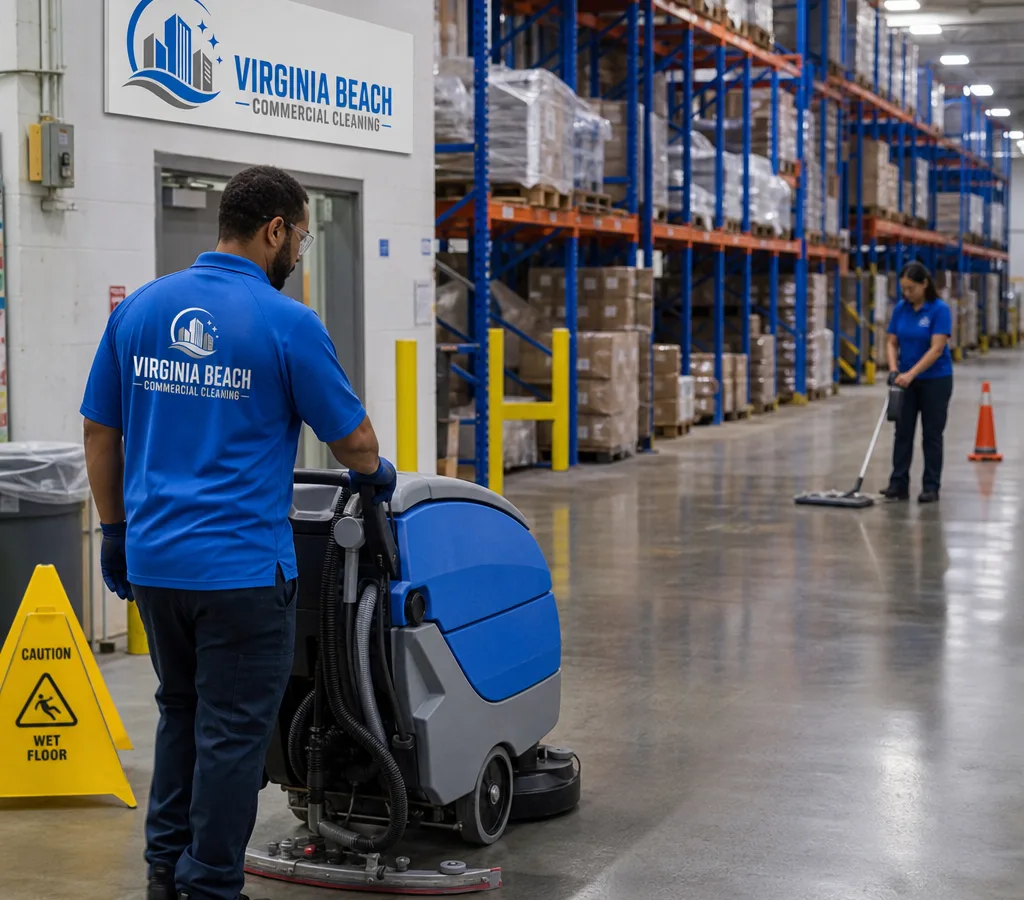
Professional cleaning team working in an active industrial facility aisle with safety cones, a floor scrubber, warehouse racking, and polished concrete floors
Commercial Care / Quality Checked
Dependable Routine Care

Cleaning plans built for buildings that sit far apart

A business park off one corridor and a warehouse several exits away are not interchangeable stops, even when the task list looks identical. The practical limit on a Chesapeake schedule is how many buildings a crew can reach properly in one shift, which is why the scope is written per site and the visit order is fixed before service starts. That keeps the last building of the evening on the same checklist as the first. Where a company runs several Chesapeake locations, the plan can either send one crew through them in sequence or split them across nights, depending on which produces a steadier result. Both options are priced openly so the trade-off between visit length and frequency is visible rather than buried in a single monthly figure.

Request a Callback
Included Work

What we cover across Chesapeake facilities

Most buildings need the same handful of areas held to a standard, with the difference sitting in frequency and floor type. These are the parts of a Chesapeake scope that get defined first.

Office and administrative areas

Desk zones, meeting rooms, break areas, restrooms and entry points on a nightly or set-day rota. Routine upkeep is separated from periodic detail work so a quieter satellite office is not visited on the same assumptions as a busy headquarters.

Warehouse and distribution space

Aisles, racking surrounds, dock areas and office pods inside the building. Concrete that carries forklift traffic is scheduled differently from the finished floor in an attached office, and both appear separately in the scope.

Restrooms and shared facilities

Fixtures, partitions, floors, mirrors and dispensers, with restocking listed explicitly as ours or yours. Restroom frequency is usually the first thing raised when a building's standard has slipped, so it is tracked on its own.

Retail and customer-facing areas

Sales floors, entrances, glass and fitting areas kept presentable during trading hours, with back-of-house handled on the same visit rather than deferred to a separate call-out.

Floor care by surface type

Carpet extraction, hard-floor scrubbing and periodic refinishing, each on its own interval. Mixed-surface buildings get a per-area program instead of one blanket floor line in the scope.

Medical and clinical suites

Exam rooms, waiting areas and shared touch points cleaned to a documented order of work, with clinical and general waste streams kept apart and the sequence recorded so every visit runs the same way.

Request a Callback
Commercial Care / Quality Checked
Daily and After-Hours Coverage

A fixed visit order keeps recurring service predictable

Request a Callback
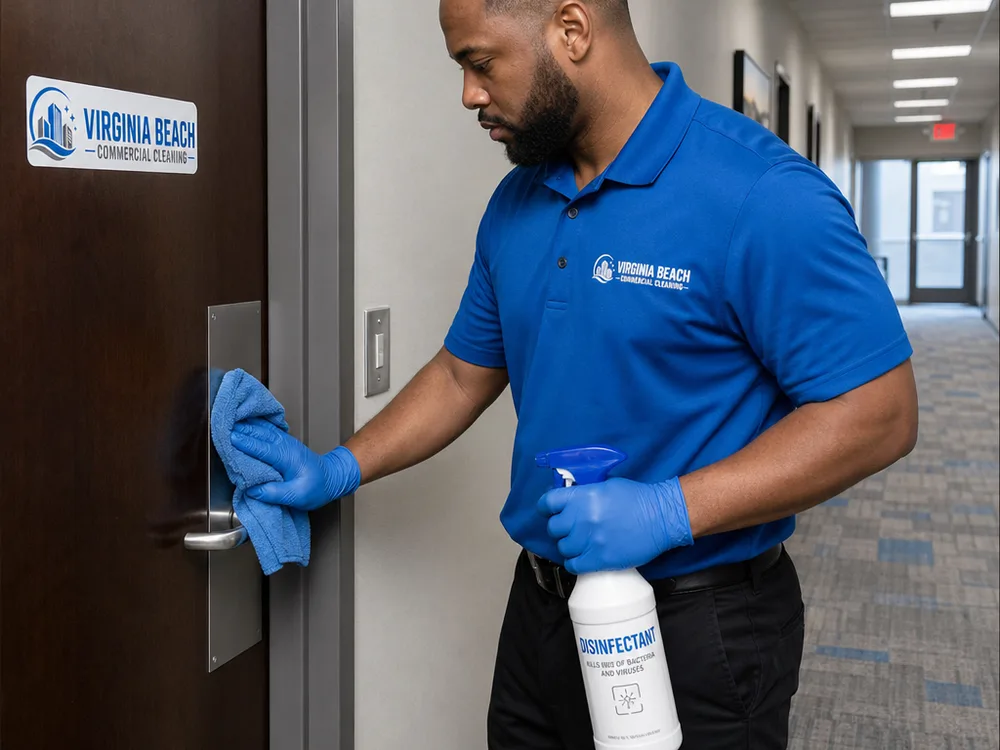
Cleaner sanitizing office hallway door hardware and a light switch with disinfectant and a microfiber cloth

Routing is part of the service rather than an afterthought. Before recurring work begins, each building is slotted into an order that accounts for access windows, alarm procedures and the hours when a crew can actually work without disrupting staff. Once that order is set, it stays put, because a schedule that changes week to week is the usual reason a facility manager starts noticing missed areas. Access detail gets written down at the same time: who holds keys or codes, which entrance to use after hours, where to park a van without blocking a dock, and who to call if a door does not open. Capturing that once prevents the slow erosion where a crew skips a wing because nobody could get into it, then keeps skipping it. When something does change, the written scope is updated rather than passed along verbally.

  • Lobbies and reception: spot-clean glass, straighten visible areas, remove entry debris, and wipe high-touch points.
  • Restrooms: disinfect fixtures, clean mirrors, mop floors, empty trash, and restock dispensers.
  • Breakrooms and kitchens: wipe counters and tables, clean sinks and exterior appliance surfaces, and manage trash and recycling.
  • Offices and shared work areas: empty waste, spot-clean fingerprints, dust accessible surfaces as defined in scope, and vacuum or mop.
  • Stairwells, hallways, and elevators: touch up smudges, keep floors clean, and maintain first-impression areas.
A Clear Start

How Chesapeake cleaning gets planned

The opening conversation establishes what needs attention and when a crew can be on site. Everything after that is written down before any work begins.

01

Describe the building

Share the facility type, roughly how it is used and which areas need regular attention. Early detail points to the right questions about access, traffic levels and floor care.

02

Walk the site

A walkthrough confirms square footage, restroom count, floor surfaces, access timing and anything with special handling. It is also where the realistic visit length gets established.

03

Agree a written scope

The scope names the rooms, surfaces and frequency for each area, and states what sits outside routine service. Both sides work from the same document rather than an understanding.

04

Set the schedule and access

Visit days, hours and entry procedure are fixed, along with the order buildings are reached when there is more than one. Key, code and alarm details are recorded here.

05

Review and adjust

After the first few visits the scope is checked against what the building actually needs. Frequencies move, areas get added, and the document is revised so the crew keeps working to it.

Request a Callback
Planning Your Budget

How is Chesapeake commercial cleaning priced?

Pricing starts from the schedule a building needs rather than a rate per building. Across our service area, commercial cleaning typically runs from about $0.10 to $0.30 per square foot per visit, and many smaller offices land somewhere around $250 to $900 per month depending on how often a crew attends. Larger facilities, medical spaces and higher-traffic buildings usually price above that, because they need more labor time and a tighter process. Where a company runs several Chesapeake buildings, the travel between them is part of the labor time and is quoted openly instead of hidden in a single figure. Final pricing is confirmed after an on-site walkthrough and a written scope of work, so the number reflects the building rather than an estimate made over the phone.

Request a Callback
Answers Before You Decide

Chesapeake commercial cleaning FAQ

The questions that come up most often here concern access, timing and how a plan holds together across buildings that are not close to one another.

Can you clean a Chesapeake site after hours?

Yes, as long as the access process is clear. During the walkthrough we confirm entry instructions, alarm or key procedure, the rooms in scope and the work window, then write all of it into the scope so the crew is not improvising.

We have several buildings here. One crew or several?

Either, and the choice is usually about consistency. One crew moving through the buildings in a fixed order keeps the standard identical; splitting them across nights gives each site more time. We price both so the trade-off is visible before you decide.

How do you keep the last building of the night from getting less?

By fixing the visit order and the time allowed per site before service starts, rather than letting the route absorb overruns. If a building consistently needs longer than the scope allows, the scope is wrong and gets revised.

Do you handle warehouse concrete and office carpet differently?

Yes. They go in the scope as separate areas with their own intervals, because forklift-traffic concrete and a finished office floor fail in different ways and respond to different equipment.

Can you include restroom supplies?

Supply restocking can be part of the plan. At the walkthrough we document what you want us to provide against what your team already supplies, then it is written into the scope with everything else.

What happens if our needs change mid-contract?

The scope is revised rather than stretched informally. Adding an area, changing a frequency or moving a visit day is a documented change, so the crew is working to a current checklist instead of remembering an instruction.

Do you offer one-time cleaning, or only recurring plans?

Both. One-time work is common before an inspection or a move, or to bring a building back to a baseline before a routine schedule starts. Recurring plans run on a written scope and a fixed visit order.

A Scope You Can Hold Us To

Plan Chesapeake cleaning around how your buildings run

Tell us the building type, the areas that need regular attention and the hours a crew can be on site. We will walk the facility, put a written scope together and set a visit order you can hold us to.

Request a quote

Tell us about your facility

Send the details and we will arrange a walkthrough, then confirm a written scope and cost before anything is scheduled.

Call (757) 493-6329