
Clinical and exam rooms
Exam surfaces, shared touch points, floors and waiting areas cleaned to a documented order of work, with clinical and general waste kept separate and the sequence recorded so every visit matches.
Serving Virginia Beach, Virginia & surrounding areas
Mon–Fri 8am–6pm Sat 9am–2pm
Older commercial fabric rewards a careful program and punishes a heavy-handed one. Where a building has surfaces that cannot be replaced easily, the method is chosen to preserve them while still meeting the standard the occupants need.
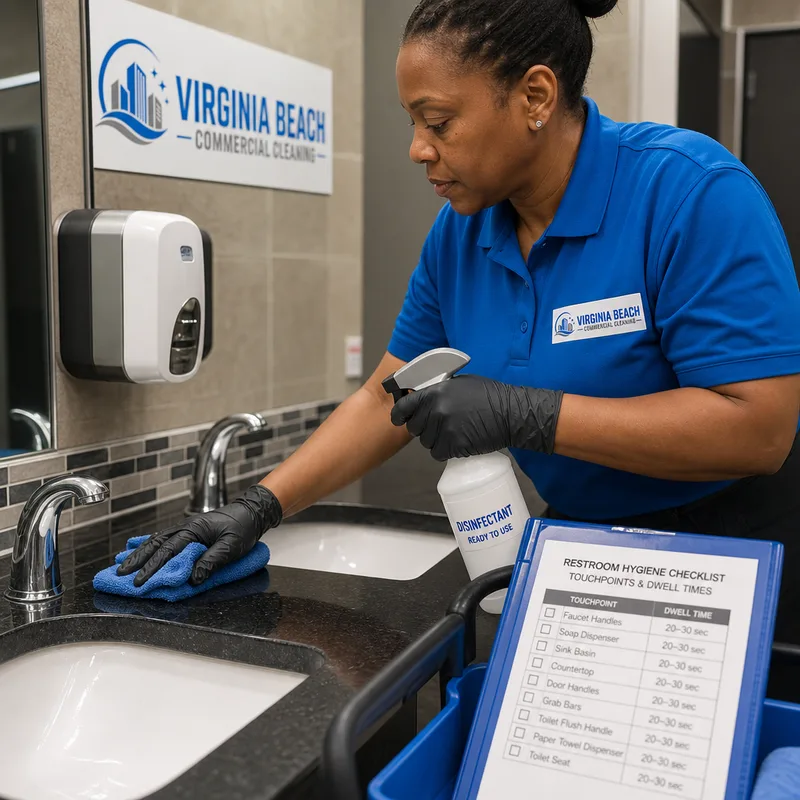
Heritage fabric changes the calculation behind every product and machine choice. Original timber, early ceramic, soft stone and painted joinery all tolerate far less moisture, abrasion and alkalinity than their modern equivalents, and the damage tends to be cumulative rather than immediate, which is why it is easy to miss until it is permanent. The scope for a building like this specifies the mildest effective method per surface and names what must not be used, with both recorded in writing rather than relying on a crew's judgment in the moment. Frequency does some of the work that aggression otherwise would. Cleaning a vulnerable surface more often with a gentle method keeps it presentable without the periodic heavy intervention that causes harm, and that trade is set out openly in the plan so the reasoning is visible.
The areas below carry both the highest expectations and, in older premises, the most risk of damage from the wrong method.
Exam surfaces, shared touch points, floors and waiting areas cleaned to a documented order of work, with clinical and general waste kept separate and the sequence recorded so every visit matches.
Entrance areas, counters, seating and circulation that carry heavy footfall across hard, often original floors. Frequency is set by traffic rather than by the size of the room.
Dry methods and minimal moisture, with products chosen for the finish actually present. Restrictions are written into the scope, since this is where irreversible damage usually begins.
Fixtures, partitions, floors and dispensers at a frequency matched to public use. In older premises, grout and glaze condition is recorded at setup so existing wear is understood.
Desk areas, shared tables, touch points and floors on a set rota, with joinery and painted surfaces handled using the gentler products named in the scope.
Occasional deeper treatment matched to the surface rather than a standard strip and refinish, planned on a longer interval and only where the floor will genuinely tolerate it.
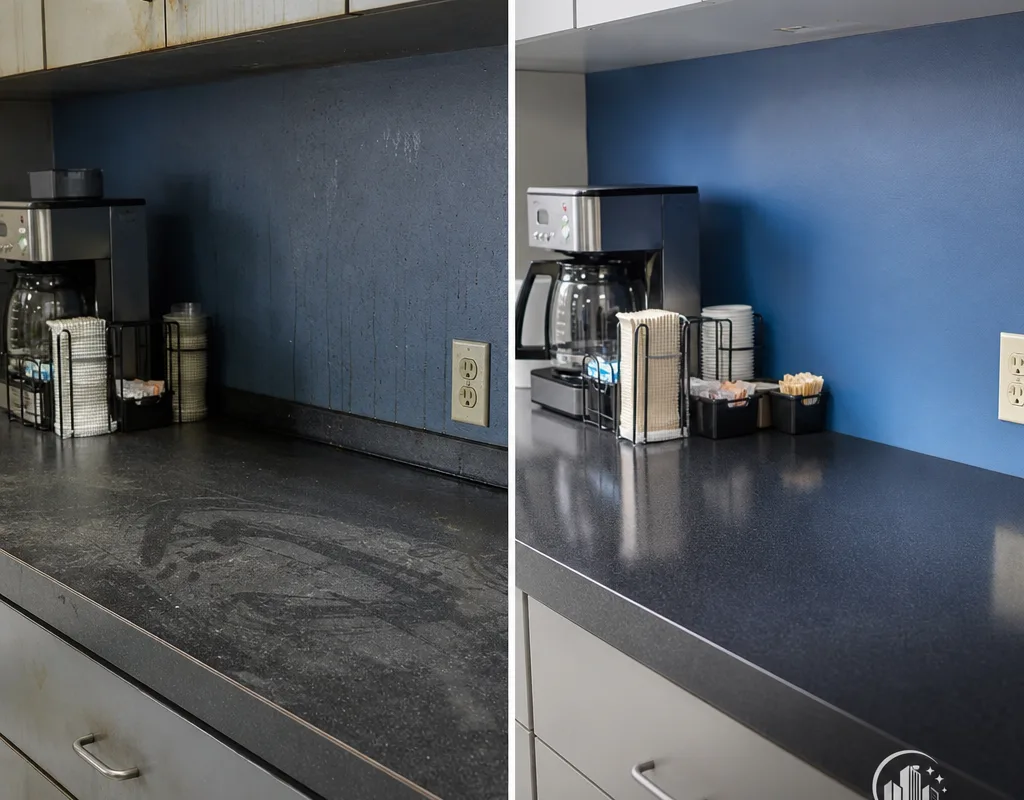
In a building with irreplaceable surfaces, a task list on its own is insufficient: two crews can both complete every line and leave the premises in very different condition depending on what they reached for. So the scope carries the method alongside the task, including the product class, how much water, which machine and speed, and an explicit list of what is not to be used anywhere in the building. Clinical areas need the same discipline for a different reason, where the order of operations is part of the outcome rather than a matter of efficiency. Cleaning from cleaner areas towards dirtier ones, keeping equipment separated between clinical and general space, and handling waste streams in a fixed sequence are all written down so the process is repeatable and can be checked, not simply asserted.
Setup takes the building's fabric as seriously as its task list, because the method decisions made here are the ones that are hard to undo.
Tell us the building type, which areas the public or patients reach, and anything you already know about the surfaces. That frames the walkthrough.
We record floor and fixture types room by room with their current condition, noting where moisture, abrasion or strong products would cause harm.
Each surface gets a named method and an explicit do-not-use list. For clinical space, the order of operations and waste handling are specified too.
Frequencies are set so gentle methods still hold the standard, with the working window, access and restocking responsibility documented.
We check the surfaces once the full cycle has run, confirming the program is holding the standard without causing wear, and adjust intervals rather than escalating to stronger methods.
The quote reflects the schedule, the surfaces and the care the building requires. Across our service area, commercial cleaning typically runs from about $0.10 to $0.30 per square foot per visit, and many smaller offices land around $250 to $900 per month depending on frequency. Medical and clinical spaces generally price above that band, because the documented order of work and the waste handling both take labor time. A gentle program on vulnerable surfaces can mean slightly higher frequency at lower intensity, which is usually cheaper over a few years than repairing damage from an aggressive routine. Final pricing is confirmed after a walkthrough and a written scope of work.
Questions here concentrate on protecting older surfaces and on the documentation that clinical and public buildings need.
By specifying the mildest effective method per surface and writing an explicit do-not-use list into the scope. Damage to older fabric is usually cumulative, so the restriction has to be documented rather than remembered.
Yes, to a documented order of work with clinical and general waste kept separate. The sequence and the equipment separation are written into the scope so the process is repeatable and can be checked.
Generally yes, by adjusting frequency rather than intensity. Cleaning a vulnerable surface a little more often with a mild method avoids the periodic heavy treatment that causes the harm.
Often that is the wrong treatment for the surface, and we will say so. Where a floor genuinely tolerates deeper work it is planned on a long interval; where it does not, we propose a conservation-minded alternative.
Frequency is set by traffic rather than room size, with entrance matting and more frequent attention at the doors, which is where most of the grit that wears a floor actually arrives.
Whichever you prefer, as long as it is written down. At the walkthrough we document what we provide against what your team supplies and put it in the scope with everything else.
Yes. Some buildings need a periodic deeper visit rather than a recurring schedule, and that is quoted the same way: survey the surfaces first, then a written scope, then the work.
Tell us the building type, the areas the public reach and any surfaces you want handled carefully. We will survey the fabric and write a scope that names the method as well as the task.
Request a quote
Send the details and we will arrange a walkthrough, then confirm a written scope and cost before anything is scheduled.